So I keep turning all this over in my own brain. What is the appeal of heads? Especially heads that continue to talk and eat and laugh, after being violently separated from their bodies?
The heads in the stories that continue to talk and eat and drink just as if still alive--what's that about? Does this serve as a slightly gruesome metaphor for an individual living on in the memory of his loved ones? The predominately celtic stories I've been reading treat the subject in a particularly literal way, though. Lisa's story about Conchobor Mac Nessa living on for seven years with the brain-ball of an enemy king, Mesgregra, embedded in his head, for example. Now--it could very probably be read as a sort of sociological observation about the lasting scars and damage created by feuding. The tale seems somewhat more literal that that, though. Here are some links to different online versions of the story, and further resources. They seem mostly adequate.
Also, they really did preserve the brains of vanquished foes, just so.
I think it has to do with faces: expressions, familiar features, and voices. How do we know the one we love, from all others? How do we identify our enemy? How do we discern who fathered whom, who takes after his or her mother, how do we recognize a friend or sibling we last saw months or years ago?
What do we think of, when we're picturing someone, wondering about them, or missing them? Faces are integral to remembrance.
Tuesday, August 16, 2005


Monday, August 15, 2005
Severed heads and UFOs (with a wink and a nod to Digital Medievalist)
Here's an interesting thing.
By way of background, let me just briefly explain that I've been researching a bunch of old stuff--old as in iron-age to medieval--for the next book. (A book I'll write, should I ever actually finish the current rewrite, but that's another blog entry.)
Now, if I had any sense, I'd be a bit daunted, seeing as how it's a great whack of history--2000 years-ish. I sort of figured, "hey, how much could there really be, still extant?" Quite a lot, as it turns out. Not that much of it written down. Hardly any of it written in any language I can actually read. Yet.
Heh.
Months later, I'm doodling bog-bodies in the margins of notes while I'm on the telephone, and referencing Celtic saints in everyday conversation. My housemates are starting to give me strange and searching looks. I think that's probably due to the bog-body-noose doodles
I've noticed an interesting thing, however--wherever there's a lack of solid information or recorded facts, people are more than willing to make up something imaginative. If that bit of speculation is particularly fun and nifty, other people pick up the idea, quote it, and even cite it sometimes. Presto, we have something more-or-less accepted--at least by the interested layman--that's quite simply never really been established as true or real. Fun, eh?
My background is in Lit Crit. We're supposed to make creative-but-plausible shit up. That's what we get paid for. So this doesn't bother me as much as it might bother a real scholar. I do find I'm losing patience for the more outrageous crap out there masquerading as information.
A case in point: The Cult of the Severed Head.
Various sites suggest that everything from public beheadings to the portraits on modern coins can be attributed to this ancient cult. The Inquisition's prosecution of the Templars has been blamed this whole meme of severed heads, as well. Even the excellent Wikipedia takes the fact of an actual cult as given, even if the details are a bit foggy.
Some of the stuff that can be found is...urm...quite odd.
The more conservative speculation runs along the lines of, "look, they used all these heads in art, and architecture, and decoration; severed heads that speak show up in so many stories of heroes and saints; they took the heads of their enemies in battle--it all seems to suggest that human heads were quite important."
Some of this stuff seems to come from a Greek historian named Diodorus Siculus, who recorded the Celtic battle practice of collecting the heads of enemies, buying and selling various heads, methods of preserving them, and so on.
The more wild speculation suggests that the Celts closely followed some specific neolithic religion--traces of which can still be found on Easter Island and elsewhere--specifically involving bizarre rituals expressing actual worship of these heads, which may or may not have actually spoken. And probably had something to do with UFOs, too.
John Billingsley had this rather common-sense approach to the whole thing, "Any serious investigation of the subject reveals the cultic significance of the head to not only pre- and postdate the Celts, but also that the kind of stylisation encountered in Celtic circles has much wider currency. There are several reasons to question the modern understanding of the 'Celtic head' . As I have mentioned, the human head quite obviously had mystical meaning in cultures other than the Celts, occurring the world over, including pre-Celtic Europe. Thus, the religious perception of the head was not unique to the Celts, although it can be argues that they gave more intense concrete expression to the motif than it had ever had before."
Anyhoo--I think it's all terribly cool, and I haven't had such a fabulous time reading in years. It's like reading was when I was a kid, and everything was trackless and just waiting for me. For any of you feeling a bit jaded with whatever new things you're reading, I highly recommend looking for very old stuff, too.
It all goes to show, I think, that we just can't resist a good story. If the story's already got heroes, saints, and cannibals; then a few zombies and UFOs just make it all the better, right?
By way of background, let me just briefly explain that I've been researching a bunch of old stuff--old as in iron-age to medieval--for the next book. (A book I'll write, should I ever actually finish the current rewrite, but that's another blog entry.)
Now, if I had any sense, I'd be a bit daunted, seeing as how it's a great whack of history--2000 years-ish. I sort of figured, "hey, how much could there really be, still extant?" Quite a lot, as it turns out. Not that much of it written down. Hardly any of it written in any language I can actually read. Yet.
Heh.
Months later, I'm doodling bog-bodies in the margins of notes while I'm on the telephone, and referencing Celtic saints in everyday conversation. My housemates are starting to give me strange and searching looks. I think that's probably due to the bog-body-noose doodles
I've noticed an interesting thing, however--wherever there's a lack of solid information or recorded facts, people are more than willing to make up something imaginative. If that bit of speculation is particularly fun and nifty, other people pick up the idea, quote it, and even cite it sometimes. Presto, we have something more-or-less accepted--at least by the interested layman--that's quite simply never really been established as true or real. Fun, eh?
My background is in Lit Crit. We're supposed to make creative-but-plausible shit up. That's what we get paid for. So this doesn't bother me as much as it might bother a real scholar. I do find I'm losing patience for the more outrageous crap out there masquerading as information.
A case in point: The Cult of the Severed Head.
Various sites suggest that everything from public beheadings to the portraits on modern coins can be attributed to this ancient cult. The Inquisition's prosecution of the Templars has been blamed this whole meme of severed heads, as well. Even the excellent Wikipedia takes the fact of an actual cult as given, even if the details are a bit foggy.
Some of the stuff that can be found is...urm...quite odd.
The more conservative speculation runs along the lines of, "look, they used all these heads in art, and architecture, and decoration; severed heads that speak show up in so many stories of heroes and saints; they took the heads of their enemies in battle--it all seems to suggest that human heads were quite important."
Some of this stuff seems to come from a Greek historian named Diodorus Siculus, who recorded the Celtic battle practice of collecting the heads of enemies, buying and selling various heads, methods of preserving them, and so on.
The more wild speculation suggests that the Celts closely followed some specific neolithic religion--traces of which can still be found on Easter Island and elsewhere--specifically involving bizarre rituals expressing actual worship of these heads, which may or may not have actually spoken. And probably had something to do with UFOs, too.
John Billingsley had this rather common-sense approach to the whole thing, "Any serious investigation of the subject reveals the cultic significance of the head to not only pre- and postdate the Celts, but also that the kind of stylisation encountered in Celtic circles has much wider currency. There are several reasons to question the modern understanding of the 'Celtic head' . As I have mentioned, the human head quite obviously had mystical meaning in cultures other than the Celts, occurring the world over, including pre-Celtic Europe. Thus, the religious perception of the head was not unique to the Celts, although it can be argues that they gave more intense concrete expression to the motif than it had ever had before."
Anyhoo--I think it's all terribly cool, and I haven't had such a fabulous time reading in years. It's like reading was when I was a kid, and everything was trackless and just waiting for me. For any of you feeling a bit jaded with whatever new things you're reading, I highly recommend looking for very old stuff, too.
It all goes to show, I think, that we just can't resist a good story. If the story's already got heroes, saints, and cannibals; then a few zombies and UFOs just make it all the better, right?
Saturday, August 13, 2005
Cindy Sheehan
This isn't typically a political blog, although I do stray into the occasional tinfoil-beanie rant.
Actually, I firmly believe that human beings want the same things, and hold the same things close to their hearts--whether right or left. I think we disagree deeply and painfully about the best way to go about protecting and preserving all that we hold near and dear.
Cindy Sheehan has a diary at Daily Kos. Please read it. Her son, Casey, was killed in Iraq. She's trying to get President Bush to actually talk to her. He won't. She opposes the war in Iraq with ferocity and tenacity.
Here is an account of her earlier meeting with President Bush, shortly after her son's death.
This lunacy HAS to stop.
Actually, I firmly believe that human beings want the same things, and hold the same things close to their hearts--whether right or left. I think we disagree deeply and painfully about the best way to go about protecting and preserving all that we hold near and dear.
Cindy Sheehan has a diary at Daily Kos. Please read it. Her son, Casey, was killed in Iraq. She's trying to get President Bush to actually talk to her. He won't. She opposes the war in Iraq with ferocity and tenacity.
Here is an account of her earlier meeting with President Bush, shortly after her son's death.
This lunacy HAS to stop.
Friday, August 12, 2005
Happy Thought
For quite some time now--years, really--I've been worried and troubled by the idea that snail-mail letter-writing seems to be dying out.
We know so very much about historic figures from their personal papers: letters, journals, etc.; and I just couldn't imagine a future in which Lit classes read old emails from author to friend or editor, full of email-isms and "w00t!" (which is a bit what my emails look like, for instance.)
Then I realized that we'll have blogs, instead. Heh.
Dr. Nokes at Unlocked Wordhoard touched on this the other day, with a post discussing an entry at Public Brewery speculating that Mark Twain would have been a terrific blogger. Public Brewery's PRB further ponders "I wonder what other people from the pre-blogging era might have made good bloggers. I'll throw out H. L. Mencken, Dorothy Parker, and Oscar Wilde for starters...
Dr. Nokes continues the discussion of writers who might have made terrific bloggers. (He's still tinkering with some technical attributes of his blog, so let me know if that link isn't quite right for you.) He adds a number of names to the list.
Jonathan Swift gets my vote as someone who would have made great use of blogging.
But the whole concept made me smile--because, for me, the most interesting stuff on blogs often seems to happen in the comments, between various readers and the writer. That dynamic communication neatly reproduces a correspondence relationship between author and acquaintances/readers.
There might be a literary future, after all!
We know so very much about historic figures from their personal papers: letters, journals, etc.; and I just couldn't imagine a future in which Lit classes read old emails from author to friend or editor, full of email-isms and "w00t!" (which is a bit what my emails look like, for instance.)
Then I realized that we'll have blogs, instead. Heh.
Dr. Nokes at Unlocked Wordhoard touched on this the other day, with a post discussing an entry at Public Brewery speculating that Mark Twain would have been a terrific blogger. Public Brewery's PRB further ponders "I wonder what other people from the pre-blogging era might have made good bloggers. I'll throw out H. L. Mencken, Dorothy Parker, and Oscar Wilde for starters...
Dr. Nokes continues the discussion of writers who might have made terrific bloggers. (He's still tinkering with some technical attributes of his blog, so let me know if that link isn't quite right for you.) He adds a number of names to the list.
Jonathan Swift gets my vote as someone who would have made great use of blogging.
But the whole concept made me smile--because, for me, the most interesting stuff on blogs often seems to happen in the comments, between various readers and the writer. That dynamic communication neatly reproduces a correspondence relationship between author and acquaintances/readers.
There might be a literary future, after all!
Wednesday, August 10, 2005
Straight-Girl Summer Camp
Bear with me, kind bloggees. Not to beat this poor horse into the ground, but in yesterday's "Need an Interpreter" post, you had some very interesting things to say.
The "straight-girl summer-camp" thing is something I've wondered about for years. That particular phrase was born during conversations between myself and my housemates and other close female friends as a short-hand way for me to say, "you've suddenly started speaking a completely alien language, in terms of my cultural experience, and I need you to explain in explicit and simple detail just what it is I've missed, that you take for granted" whenever we reach a point in the conversation where someone is looking at me as if discovering I was raised by wolves.
Flippant as the phrase is, nonetheless sometimes I must wonder.
Jill said, in the comments: "Straight girl school? Ha. My mom was a hippie chick. I learned zilcho from her re: being a woman and she didn't know to send me to that place.
I'm still trying to figure it all out. Though most times? I just do ma own thang."
Not zilcho, Jill--cuz didn't you grow up to do years of public-interest law? Seems like you learned rather a lot about being a human being, at least.
Are we all making it up as we go along, like Jill suggests? Where do you credit learning how to be an adult woman in our culture?Are there things we learned from our mothers, either by observation or direct communication, that still are valuable?
How fast are things changing? How big an influence do you really think the various entertainment media is, on girls-becoming-women? Does that thing about white shoes after labor-day still matter in anyone's reality?
Because I have to admit, I think of myself as a human sooner than I think of myself as a woman. For years I suspected that sense of gender-alienation had to do with being queer--but now I'm not so sure. I wonder if I didn't choose, on an unconcious level, to reject the limitations sometimes inherent in gender-specific labels for ourselves. Because I don't feel in any way as if I reject my actual sex--I enjoy being female, and wouldn't change that for anything.
I wonder, though, if there isn't a reality gap growing between sex and gender. I also wonder where those gender rituals that serve to identify us to one another become stifling, rather than providing safety and comfort.
The "straight-girl summer-camp" thing is something I've wondered about for years. That particular phrase was born during conversations between myself and my housemates and other close female friends as a short-hand way for me to say, "you've suddenly started speaking a completely alien language, in terms of my cultural experience, and I need you to explain in explicit and simple detail just what it is I've missed, that you take for granted" whenever we reach a point in the conversation where someone is looking at me as if discovering I was raised by wolves.
Flippant as the phrase is, nonetheless sometimes I must wonder.
Jill said, in the comments: "Straight girl school? Ha. My mom was a hippie chick. I learned zilcho from her re: being a woman and she didn't know to send me to that place.
I'm still trying to figure it all out. Though most times? I just do ma own thang."
Not zilcho, Jill--cuz didn't you grow up to do years of public-interest law? Seems like you learned rather a lot about being a human being, at least.
Are we all making it up as we go along, like Jill suggests? Where do you credit learning how to be an adult woman in our culture?Are there things we learned from our mothers, either by observation or direct communication, that still are valuable?
How fast are things changing? How big an influence do you really think the various entertainment media is, on girls-becoming-women? Does that thing about white shoes after labor-day still matter in anyone's reality?
Because I have to admit, I think of myself as a human sooner than I think of myself as a woman. For years I suspected that sense of gender-alienation had to do with being queer--but now I'm not so sure. I wonder if I didn't choose, on an unconcious level, to reject the limitations sometimes inherent in gender-specific labels for ourselves. Because I don't feel in any way as if I reject my actual sex--I enjoy being female, and wouldn't change that for anything.
I wonder, though, if there isn't a reality gap growing between sex and gender. I also wonder where those gender rituals that serve to identify us to one another become stifling, rather than providing safety and comfort.
Tuesday, August 09, 2005
Line-by-Line rant
So I just got this email forward from my mother, bless her. I wish I could get her to see it upside down. *sigh*
We have enjoyed the redneck jokes for years. It's time to take a
reflective look at the core beliefs of a culture that values home,
family, country and God. If I had to stand before a dozen terrorists who
threaten my life, I'd choose a half dozen or so rednecks to back me up.
Tire irons, squirrel guns and guts -- that's what rednecks are made of.
I hope I am one of those. If you feel the same, pass this on to your
redneck friends. Ya'll know who ya' are...
errr...yes. Well. Actually, the likelihood of finding oneself alone, facing a dozen or so terrorists is pretty damn slender-to-non-existent. So what on earth is the percentage in creating this artificial make-believe scenario? And why, when one does so, does it start to resemble a post-modernistic and surreal version of West Side Story?
Pardon me while I burst into song:
"When you're [American],
You're a [redneck] all the way
From your first cigarette
To your last dyin' day...
When you're [American],
If the spit hits the fan,
You got brothers around,
You're a family man!..."
You might be a redneck if: It never occurred to you to be offended by
the phrase, "One nation, under God."
Actually, I'm a flaming, over-educated, far-left liberal. The phrase still doesn't offend me in the slightest. However, I also support anyone's right not to believe or say it.
You might be a redneck if: You've never protested about seeing the
Commandments posted in public places.
See above.
You might be a redneck if: You still say "Christmas" instead of "Winter
Festival."
WTF is that about? Everyone but god-fearing conservatives hates Christmas?
You might be a redneck if: You bow your head when someone prays.
Good manners are now exclusively the territory of rednecks? Oh dear. Or is it that everyone but "rednecks"--which is code here, and doesn't really mean redneck in the original sense of the term, at all--is unChristian, antagonistic, and rude about it.
You might be a redneck if: You stand and place your hand over your heart
when they play the National Anthem.
Again, see above. Add unpatriotic to the litany of imagined offenses.
You might be a redneck if: You treat Viet Nam vets with great respect,
and always have.
Unless that vet is John Kerry, of course. Then all bets are off, right?
Again, see above. WTF is really going on with this? I treat other human beings with great respect, unless and until they demonstrate themselves to be other than respectable.
If fact, Vietnam has been recently resurrected as a mirror for Iraq, and rather than attacking the issue of Iraq directly, I think this is a nasty straw-man argument.
You might be a redneck if: You've never burned an American flag.
Because everyone else is out there setting fire to flags willy-nilly, of course. Also, love-of-country is now exclusively the territory of rednecks, NASCAR fans, and straight white conservatives.
You might be a redneck if: You know what you believe and you aren't
afraid to say so, no matter who is listening.
Actually, again, I'm a flaming, far-left liberal. See above answers. I can provide a bunch of links to similarly-unafraid people's sites, if necessary.
You might be a redneck if: You respect your elders and expect your kids
to do the same.
See the Vietnam-Vet answer. This is just "family-values" crap, in thin disguise.
You might be a redneck if: You'd give your last dollar to a friend.
Generosity and open-handedness are also now the exclusive province of the same group of people who support crap like the Minutemen?
If you got this email from me, it is because I believe that you, like
me, have just enough Red Neck in you to have the same beliefs as those
talked about in this email.
God Bless the USA!
And god bless this whole besieged and torn world, and all the humans trapped here.
Okay. I'm only bothering to respond to this because I'm terribly disturbed at the subtext--which is more of the tired old "either you're with us, or you're unAmerican and oughta just emigrate while we'll still let you go."
It's flat out scary and dangerous to imply that anyone willing to challenge the government and its actions has questionable values. It's not even particularly hidden, here. While there's nothing particularly new or revolutionary about the anti-intellectualism and perverse pride in toeing the "American" line in terms of both thought and behavior, I think it is becoming more prevalent.
That fucking terrifies me.
Even scarier is the idea that someone is sitting around churning out this propaganda. This is slick, subtle, and effective. This is emphatically not something Joe Schmoe's sister whacked out, in between loads of laundry and picking up the kids from soccer.
Who the hell is footing the bill?
We have enjoyed the redneck jokes for years. It's time to take a
reflective look at the core beliefs of a culture that values home,
family, country and God. If I had to stand before a dozen terrorists who
threaten my life, I'd choose a half dozen or so rednecks to back me up.
Tire irons, squirrel guns and guts -- that's what rednecks are made of.
I hope I am one of those. If you feel the same, pass this on to your
redneck friends. Ya'll know who ya' are...
errr...yes. Well. Actually, the likelihood of finding oneself alone, facing a dozen or so terrorists is pretty damn slender-to-non-existent. So what on earth is the percentage in creating this artificial make-believe scenario? And why, when one does so, does it start to resemble a post-modernistic and surreal version of West Side Story?
Pardon me while I burst into song:
"When you're [American],
You're a [redneck] all the way
From your first cigarette
To your last dyin' day...
When you're [American],
If the spit hits the fan,
You got brothers around,
You're a family man!..."
You might be a redneck if: It never occurred to you to be offended by
the phrase, "One nation, under God."
Actually, I'm a flaming, over-educated, far-left liberal. The phrase still doesn't offend me in the slightest. However, I also support anyone's right not to believe or say it.
You might be a redneck if: You've never protested about seeing the
Commandments posted in public places.
See above.
You might be a redneck if: You still say "Christmas" instead of "Winter
Festival."
WTF is that about? Everyone but god-fearing conservatives hates Christmas?
You might be a redneck if: You bow your head when someone prays.
Good manners are now exclusively the territory of rednecks? Oh dear. Or is it that everyone but "rednecks"--which is code here, and doesn't really mean redneck in the original sense of the term, at all--is unChristian, antagonistic, and rude about it.
You might be a redneck if: You stand and place your hand over your heart
when they play the National Anthem.
Again, see above. Add unpatriotic to the litany of imagined offenses.
You might be a redneck if: You treat Viet Nam vets with great respect,
and always have.
Unless that vet is John Kerry, of course. Then all bets are off, right?
Again, see above. WTF is really going on with this? I treat other human beings with great respect, unless and until they demonstrate themselves to be other than respectable.
If fact, Vietnam has been recently resurrected as a mirror for Iraq, and rather than attacking the issue of Iraq directly, I think this is a nasty straw-man argument.
You might be a redneck if: You've never burned an American flag.
Because everyone else is out there setting fire to flags willy-nilly, of course. Also, love-of-country is now exclusively the territory of rednecks, NASCAR fans, and straight white conservatives.
You might be a redneck if: You know what you believe and you aren't
afraid to say so, no matter who is listening.
Actually, again, I'm a flaming, far-left liberal. See above answers. I can provide a bunch of links to similarly-unafraid people's sites, if necessary.
You might be a redneck if: You respect your elders and expect your kids
to do the same.
See the Vietnam-Vet answer. This is just "family-values" crap, in thin disguise.
You might be a redneck if: You'd give your last dollar to a friend.
Generosity and open-handedness are also now the exclusive province of the same group of people who support crap like the Minutemen?
If you got this email from me, it is because I believe that you, like
me, have just enough Red Neck in you to have the same beliefs as those
talked about in this email.
God Bless the USA!
And god bless this whole besieged and torn world, and all the humans trapped here.
Okay. I'm only bothering to respond to this because I'm terribly disturbed at the subtext--which is more of the tired old "either you're with us, or you're unAmerican and oughta just emigrate while we'll still let you go."
It's flat out scary and dangerous to imply that anyone willing to challenge the government and its actions has questionable values. It's not even particularly hidden, here. While there's nothing particularly new or revolutionary about the anti-intellectualism and perverse pride in toeing the "American" line in terms of both thought and behavior, I think it is becoming more prevalent.
That fucking terrifies me.
Even scarier is the idea that someone is sitting around churning out this propaganda. This is slick, subtle, and effective. This is emphatically not something Joe Schmoe's sister whacked out, in between loads of laundry and picking up the kids from soccer.
Who the hell is footing the bill?
Monday, August 08, 2005
Interpreter Needed
Okay--so here's what happened.
An acquaintance of mine (someone with whom I must occasionally work) says to me a few weeks ago, "Oh! Your housemate has a toddler? WONDERFUL! My grandchildren have outgrown some things [my interpretation: all this leftover crap that's broken and/or worn out] --I'll bring them for you to take home!"
My response, "Oh good god, please NO! Absolutely not. Really--it's a very kind thought, and thank you for thinking of us--but he's got more clothes than he can wear until he's at least five [note of explanation: thanks to a doting extended family] and there's seriously so many toys he can only manage to get to a fraction of them every week. So seriously, no--I mean it: NO--give the stuff to someone who'll use it [my interpretation again: I don't CARE what you do with it, it isn't my problem, I just don't want to lug it all home and have to deal with it.]
Yes, I really said it, just like that. I smiled while I said it.
So the other day I see this acquaintance again. She greets me with the words, "I know you said no, but..."
Sure enough. Several big white plastic bags full of outgrown infant and toddler clothing. All of which she wants to unpack and show me. Several boxes of toddler toys, in varying condition.
NOW--before you start thinking me petty and churlish--I don't have children...I've chosen not to have children. It's sort of an accident that I'm sharing living-space with a toddler. It's much more fun than I would have thought, but still--it's an accident, and he isn't MY toddler.
I'm also not completely without tact, although "mostly feral" does come to mind again just now, for whatever reason. So I put all this stuff in the back of the jeep--in spite of the resentful looks from my dog, who must give up precious sprawling space to accommodate it all. I say "thank you" and manage not to grit my teeth too obviously.
But here's where it gets weird.
I get home later with this jeep load full of stuff. I relate the story to my two housemates--both straight women, one of them above-said toddler's mother. I'm rolling my eyes a lot while I relate this story. They just look at each other.
That was yesterday.
Today, I come home and find the toys have been assimilated into the other toys--but there are NEW boxes of toys sorted out of the combined mess, now destined for GoodWill or somewhere. There's also a box of toys set aside for me to fix, as I get time. Still others have been discarded.
The clothing? None of it will fit. Still, both of the other adult women in the house went over every single item, holding it up, spreading it out, exclaiming, "oh look how cute this is!" I saw them doing it. Several things were shown to me, and I think I was supposed to exclaim over them too, instead of furrowing my eyebrows and looking mystified and appalled.
Then it was all lovingly refolded and repacked and stacked with the boxed-up toys. I've been assigned to transport the lot down to a gently-used baby and toddler store.
So that's what happened.
Now, all day I've had this nagging feeling that I missed something crucial. Worse, I have a feeling that I was unnecessarily churlish and nasty about something that was, at most, a teeny-tiny inconvenience in my day. Even though I didn't actually say anything nasty or churlish, I thought those things.
But also, I'm sort of sensing a subtext between women--even mostly-unconnected, unrelated women--that has to do with child-raising and...and...well, I'm not quite sure just what else.
I've said for years that I missed a huge part of the cultural lexicon, because I skipped straight-girl summer classes--you know, where girls learn the ins and outs of being American women, and what to expect from themselves and others, around that.
I have this odd impression I was witness to an important community ritual, between women from two different families, who've never met. Something sweet and honorable and perhaps even a bit sacred. Something to be respected.
It all leaves me feeling rather an outsider, and it's an uncomfortable feeling.
Any of you moms out there feel like filling in some of this subtext?
An acquaintance of mine (someone with whom I must occasionally work) says to me a few weeks ago, "Oh! Your housemate has a toddler? WONDERFUL! My grandchildren have outgrown some things [my interpretation: all this leftover crap that's broken and/or worn out] --I'll bring them for you to take home!"
My response, "Oh good god, please NO! Absolutely not. Really--it's a very kind thought, and thank you for thinking of us--but he's got more clothes than he can wear until he's at least five [note of explanation: thanks to a doting extended family] and there's seriously so many toys he can only manage to get to a fraction of them every week. So seriously, no--I mean it: NO--give the stuff to someone who'll use it [my interpretation again: I don't CARE what you do with it, it isn't my problem, I just don't want to lug it all home and have to deal with it.]
Yes, I really said it, just like that. I smiled while I said it.
So the other day I see this acquaintance again. She greets me with the words, "I know you said no, but..."
Sure enough. Several big white plastic bags full of outgrown infant and toddler clothing. All of which she wants to unpack and show me. Several boxes of toddler toys, in varying condition.
NOW--before you start thinking me petty and churlish--I don't have children...I've chosen not to have children. It's sort of an accident that I'm sharing living-space with a toddler. It's much more fun than I would have thought, but still--it's an accident, and he isn't MY toddler.
I'm also not completely without tact, although "mostly feral" does come to mind again just now, for whatever reason. So I put all this stuff in the back of the jeep--in spite of the resentful looks from my dog, who must give up precious sprawling space to accommodate it all. I say "thank you" and manage not to grit my teeth too obviously.
But here's where it gets weird.
I get home later with this jeep load full of stuff. I relate the story to my two housemates--both straight women, one of them above-said toddler's mother. I'm rolling my eyes a lot while I relate this story. They just look at each other.
That was yesterday.
Today, I come home and find the toys have been assimilated into the other toys--but there are NEW boxes of toys sorted out of the combined mess, now destined for GoodWill or somewhere. There's also a box of toys set aside for me to fix, as I get time. Still others have been discarded.
The clothing? None of it will fit. Still, both of the other adult women in the house went over every single item, holding it up, spreading it out, exclaiming, "oh look how cute this is!" I saw them doing it. Several things were shown to me, and I think I was supposed to exclaim over them too, instead of furrowing my eyebrows and looking mystified and appalled.
Then it was all lovingly refolded and repacked and stacked with the boxed-up toys. I've been assigned to transport the lot down to a gently-used baby and toddler store.
So that's what happened.
Now, all day I've had this nagging feeling that I missed something crucial. Worse, I have a feeling that I was unnecessarily churlish and nasty about something that was, at most, a teeny-tiny inconvenience in my day. Even though I didn't actually say anything nasty or churlish, I thought those things.
But also, I'm sort of sensing a subtext between women--even mostly-unconnected, unrelated women--that has to do with child-raising and...and...well, I'm not quite sure just what else.
I've said for years that I missed a huge part of the cultural lexicon, because I skipped straight-girl summer classes--you know, where girls learn the ins and outs of being American women, and what to expect from themselves and others, around that.
I have this odd impression I was witness to an important community ritual, between women from two different families, who've never met. Something sweet and honorable and perhaps even a bit sacred. Something to be respected.
It all leaves me feeling rather an outsider, and it's an uncomfortable feeling.
Any of you moms out there feel like filling in some of this subtext?
Sunday, August 07, 2005
Why is it...?
Why is it that people choose not to believe you, when you tell them something straight-up and dead-honest? Even if it isn't something they want to hear, something that's difficult for you to say--but you manage to say it, anyway--wouldn't you think the natural and respectful thing would be to take you at your word?
Even worse is when someone tells me something, I behave as if what they told me was true; then they're utterly mystified, because OF COURSE they were prevaricating and I should have somehow known.
Look--I know I seem socially inept, and perhaps that is true.
However, I think it a damn sight more thoughtful and respectful to begin a conversation with the premise that all parties involved are being (mostly) truthful. Otherwise, what's the fucking point?
Even worse is when someone tells me something, I behave as if what they told me was true; then they're utterly mystified, because OF COURSE they were prevaricating and I should have somehow known.
Look--I know I seem socially inept, and perhaps that is true.
However, I think it a damn sight more thoughtful and respectful to begin a conversation with the premise that all parties involved are being (mostly) truthful. Otherwise, what's the fucking point?
Tuesday, August 02, 2005
Interesting Note:
Here's the thing: I really don't sleep. Usually I manage to balance not sleeping, life, and sleeping just enough to get by. Occasionally, though, I find myself approaching something like a ratio of sixty waking hours to, oh, three sleeping hours.
Like now.
This has relevance because I just reread the UFO post, which went up in the wee hours of the morning--around 3:30, in fact. I really have very little recollection of writing it, or what I was thinking about WHILE I wrote it--and moreover, I seem to have been just barely lucid at the time.
Heh. Human brains are very funny.
Like now.
This has relevance because I just reread the UFO post, which went up in the wee hours of the morning--around 3:30, in fact. I really have very little recollection of writing it, or what I was thinking about WHILE I wrote it--and moreover, I seem to have been just barely lucid at the time.
Heh. Human brains are very funny.
Area 51 Disease
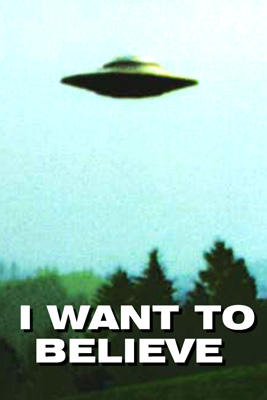 I just don't quite get the whole ufo thing, I must admit. If you google "ufo" you get well over 3 million hits.
Of course, I'm just adding to that already massive google weight.
I'm okay with that, though.
There are about 321,000 image hits alone. I waded through several pages of pictures. They ranged from pictures of clouds and helicopters and snowboarders and airplane lights, to fuzzy or grainy photos than made me think, "hmm!"
All the conspiracy theory stuff about ufos and the government seems less mysterious, though. The idea of possibly-threatening but perhaps benign beings, with mysterious and incomprehensible powers--and the government aids and abets--seems a very valid fear, on some level.
It's so much easier to spin an elaborate UFO metaphor to provide a mythology to explain our own feelings of powerlessness. It puts a false face on that which we fear and despise, so we don't actually have to confront the reality, directly.
Karl Rove might really, truly, be a hostile alien though.
Just sayin'.
Friday, July 29, 2005
Latoyia Figueroa

Just picking up what a bunch of other bloggers have already done.
Her name is Latoyia Figueroa. She's missing. She's five months pregnant. She has a seven year old daughter at home, whom I'd imagine is very frightened and confused.
The All Spin Zone is collecting donations toward a reward. As of a little while ago, the reward was up to about $7,ooo. Please help, if you can.
In the meantime, you might browse around a bit. Turns out NOW claims murder is the leading cause of death for pregnant women. This is discussed a bit more, here.
Another study has murder as second only to car accidents, in terms of injury-related deaths. It also observes that pregnant black women are more than three times as likely to be murdered than pregnant white women. Either way, it makes getting pregnant look pretty fucking grim.
Things look pretty awful for Latoyia Figueroa. But her family hasn't given up hope, and neither should we. At the very least, we should track down the person or persons responsible for her disappearance.
Now. I'm admittedly a white, upper-middle-class, well-educated lesbian. It's highly unlikely that I'll ever be murdered by some lumbering, no-neck, neanderthal-wanna-be; certainly--god forbid--not because I'm carrying his child and he senses some sort of threat to his tiny reality.
And that is, of course, a gross caricature of the kind of man who does this sort of thing. Certainly, as a lesbian, I've encountered appalling misogyny from what seemed--on the surface--to be unlikely sources.
This is just wrong on so many levels, it leaves me speechless.
If you've seen Latoyia Figueroa- please call Philadelphia Police at 215-686-3183.
You can help. Over at Daily Kos, there's an open invitation for bloggers to get on board, and help get the word out: "if you have a blog, whether you have 1 visitor per day or 1 million, please consider blogging about Latoyia. Visibility does make a difference."
Tuesday, July 26, 2005
Sexy Writers
No, it isn't an oxymoron. Just bear with me, and I'll explain.
A few different things started me thinking this direction: Nicholas, over at Return to Sender, worries a bit about whether he's too obsessive and frank in discussing his penis, wet dreams and so on (hey, he's like 20, it's normal.) Then there was the whole thing about bitchy women, and why they're so hot. Also thinking about smart people in general, and how much I like them.
So then I started thinking about writers I like to read, and why. It isn't about the people, either--it's about the words and how they're strung together.
I arrived at the conclusion that some writers are just, well, sexy--at least in the way they handle language. Those are the writers I read again and again. The novels for which I wait anxiously, for months. The blogs I've bookmarked not just at home, but on the laptop, too.
This can't be that weird, right?
Just for clarification--I don't care what these people look like, what they smell like, whether or not they're complete pills, in real life. That doesn't matter. I don't know these people, and I never will. I don't even want to, to tell you the truth.
Ah--but I know their various and yummy ways with words.
It isn't about subject matter, either. I'm not talking about writers of erotica--although that's certainly just fine, as well. A sexy writer can make anything seem interesting and tasty. It's style and vocabulary, combined with sumptuous patterns of thought and articulation.
I can't be the only voracious reader who feels this way, right?
These aren't the only writers I read and enjoy, either. Something about their prose, though, goes straight to the pleasure centers in my brain. I know it sounds odd to sexualize that, but it's the closest I can come to expressing precisely what reading can be like, for me.
Some writers just leave me with my toes curled, squirmy and warm, and breathing a bit quickly--God bless 'em. Some prose just does it for me.
Who writes like that, for you?
A few different things started me thinking this direction: Nicholas, over at Return to Sender, worries a bit about whether he's too obsessive and frank in discussing his penis, wet dreams and so on (hey, he's like 20, it's normal.) Then there was the whole thing about bitchy women, and why they're so hot. Also thinking about smart people in general, and how much I like them.
So then I started thinking about writers I like to read, and why. It isn't about the people, either--it's about the words and how they're strung together.
I arrived at the conclusion that some writers are just, well, sexy--at least in the way they handle language. Those are the writers I read again and again. The novels for which I wait anxiously, for months. The blogs I've bookmarked not just at home, but on the laptop, too.
This can't be that weird, right?
Just for clarification--I don't care what these people look like, what they smell like, whether or not they're complete pills, in real life. That doesn't matter. I don't know these people, and I never will. I don't even want to, to tell you the truth.
Ah--but I know their various and yummy ways with words.
It isn't about subject matter, either. I'm not talking about writers of erotica--although that's certainly just fine, as well. A sexy writer can make anything seem interesting and tasty. It's style and vocabulary, combined with sumptuous patterns of thought and articulation.
I can't be the only voracious reader who feels this way, right?
These aren't the only writers I read and enjoy, either. Something about their prose, though, goes straight to the pleasure centers in my brain. I know it sounds odd to sexualize that, but it's the closest I can come to expressing precisely what reading can be like, for me.
Some writers just leave me with my toes curled, squirmy and warm, and breathing a bit quickly--God bless 'em. Some prose just does it for me.
Who writes like that, for you?
Sunday, July 24, 2005
Cerebrally Hot
So I've recently discovered Bitch. Ph.D. and a couple of days ago, she was talking about Nice Guys and Bitchy Women. (Go and read it, if you'd like. Read the comments, too--I'll wait.)
Just in case you don't want to navigate over there--although I highly recommend you do--here's a synopsis.
She sorts "Bitchy Women" into possible categories:
She also suggests that perhaps Bitch #4 has some weird corollary relationship to Bitch #3, then she observes, "I think that a certain level of personal "bitchiness" is fine, and I suspect a lot of men are attracted to strong, assertive, ambitious women, which is of course the simple answer to the "why do men like bitchy women" question. But I wonder about the men who live with those of us who are (4). What's the attraction? I admit: I don't think I could do it."
*Whew* Okay. I've caught you up on what I was thinking about, and the conversation I've been following. I thought about replying there, then chose not to, since the conversation had become rather stultifyingly hetero, then increasingly combative, then began to degenerate into a discussion about whether or not Angelina Jolie is sexy (yes, but in a not-altogether-comfortable sort of way,) and why.
She says later, in the comments section: "I also wonder, come to think of it, how these archetypes play out in same-sex relationships, or whether there are different archetypes altogether."
The answer to that is, of course, "it depends" and "yes."
That is, I know same-sex couples both male and female who seem to avoid the nice partner/bitchy partner dynamic--but I've never quite managed the trick of it.
I didn't want to cut-n-paste the entire post, so I've omitted Dr. Bitch's nice-guy classifications. They're insightful and funny. Really, you should go and read the post. If you had Firefox, instead of the cursed IE, you could even open it in another tab and zap back and forth for reference.
And cuz this is my own blog, I'm not particularly inclined to explain why I classify myself as a nice-guy type. You'll have to just take my word for it. I'd love to be a bitch. I really would. I just can't ever pull it off. The closest I've come is when a dear friend described me as "mostly feral" and I'm not even certain what that precisely meant. I took it as a compliment. My friend who made the observation is very much a bitch, by the way. In the good sense of the word.
(I'm terribly tempted here to launch into a monologue about the urgent need to expand the lexicon: "Bitch" has been neatly appropriated by strong women to mean a combination of sexy/strong/wonderful/and-if-that-scares-you-we-don't-give-a-fuck. I applaud that appropriation, and suggest that those who need a gender-specific pejorative should go looking for another word to use. I'm resisting mightily. Feel free to admire my fortitude.)
What were we talking about? Oh yes. Nice dyke/bitchy dyke partnering arrangements, and what's the attraction.
*disclaimer: the following is mostly irreverent observation, thrown together out of my personal experience. It may well have no bearing on any one else's reality whatsoever. I'm okay with that.
So here's the thing. Dr. B's Bitch #3 and #4 are mostly the same woman, although there are some exceptions. She's strong, sure, intelligent and articulate in her public and professional life--but there's a cost for that. She's often strong, sure, intelligent, and articulate in her private life, as well--but sometimes she's a bit...err...neurotic.
Okay. You know what?
Occasionally, she's just plain bugfuck nutso.
Even that's sort of sexy, in a not-exactly-healthy-or-comfortable way. The "stress-monkey" side-effect is friggin' adorable as long as you can maintain a healthy detachment. Because it's still about knowing precisely what she wants, and how she wants it. Even though she's perhaps the only person in the world who can understand the logic. It spells the difference between Athena and Boadicea. Athena is, frankly, a bit boring. Boadicea is, well, a total hottie.
This is a phenomenon I've long associated with education. More recently, I've realized it's just about intelligence in general. Or rather, a combination of intelligence and a talent for appropriate introspection. So it's something I often see in well-educated women, but not exclusively.
It's a kind of sexy that's got little to do with pheremones, and so when it's combined with good pheremones, it's completely and overwhelmingly irresistable.
Just in case you don't want to navigate over there--although I highly recommend you do--here's a synopsis.
She sorts "Bitchy Women" into possible categories:
1. There are surely women who are genuinely mean people; and often these women are bitchiest to other women, but tend to play up to men, because on some level being a "bitch" is all about power. . . .
2. Women who are abusive. Nothing much to say about this; women who treat their partners and / or kids like crap suck, just the same as men like that.
3. Strong women, as we all know, all get called "bitch" sooner or later. That's the spirit in which I named the blog; and sure enough, there've been a few comments here and there. . .
4. Women who are bitchy in private relationships. . . .women who are sometimes described as "high strung" or "high maintenance" or, as Mr. B. calls me, "stressmonkeys." Up to a point, I think these women are good partners for solid, self-confident guys; we have a clear sense of boundaries, we're direct; we're not conflict-averse; we don't mess about on the borders of hinting that something's wrong--we'll come pretty straight out and let you know. But I'll admit that sometimes those skills get misapplied. . .
She also suggests that perhaps Bitch #4 has some weird corollary relationship to Bitch #3, then she observes, "I think that a certain level of personal "bitchiness" is fine, and I suspect a lot of men are attracted to strong, assertive, ambitious women, which is of course the simple answer to the "why do men like bitchy women" question. But I wonder about the men who live with those of us who are (4). What's the attraction? I admit: I don't think I could do it."
*Whew* Okay. I've caught you up on what I was thinking about, and the conversation I've been following. I thought about replying there, then chose not to, since the conversation had become rather stultifyingly hetero, then increasingly combative, then began to degenerate into a discussion about whether or not Angelina Jolie is sexy (yes, but in a not-altogether-comfortable sort of way,) and why.
She says later, in the comments section: "I also wonder, come to think of it, how these archetypes play out in same-sex relationships, or whether there are different archetypes altogether."
The answer to that is, of course, "it depends" and "yes."
That is, I know same-sex couples both male and female who seem to avoid the nice partner/bitchy partner dynamic--but I've never quite managed the trick of it.
I didn't want to cut-n-paste the entire post, so I've omitted Dr. Bitch's nice-guy classifications. They're insightful and funny. Really, you should go and read the post. If you had Firefox, instead of the cursed IE, you could even open it in another tab and zap back and forth for reference.
And cuz this is my own blog, I'm not particularly inclined to explain why I classify myself as a nice-guy type. You'll have to just take my word for it. I'd love to be a bitch. I really would. I just can't ever pull it off. The closest I've come is when a dear friend described me as "mostly feral" and I'm not even certain what that precisely meant. I took it as a compliment. My friend who made the observation is very much a bitch, by the way. In the good sense of the word.
(I'm terribly tempted here to launch into a monologue about the urgent need to expand the lexicon: "Bitch" has been neatly appropriated by strong women to mean a combination of sexy/strong/wonderful/and-if-that-scares-you-we-don't-give-a-fuck. I applaud that appropriation, and suggest that those who need a gender-specific pejorative should go looking for another word to use. I'm resisting mightily. Feel free to admire my fortitude.)
What were we talking about? Oh yes. Nice dyke/bitchy dyke partnering arrangements, and what's the attraction.
*disclaimer: the following is mostly irreverent observation, thrown together out of my personal experience. It may well have no bearing on any one else's reality whatsoever. I'm okay with that.
So here's the thing. Dr. B's Bitch #3 and #4 are mostly the same woman, although there are some exceptions. She's strong, sure, intelligent and articulate in her public and professional life--but there's a cost for that. She's often strong, sure, intelligent, and articulate in her private life, as well--but sometimes she's a bit...err...neurotic.
Okay. You know what?
Occasionally, she's just plain bugfuck nutso.
Even that's sort of sexy, in a not-exactly-healthy-or-comfortable way. The "stress-monkey" side-effect is friggin' adorable as long as you can maintain a healthy detachment. Because it's still about knowing precisely what she wants, and how she wants it. Even though she's perhaps the only person in the world who can understand the logic. It spells the difference between Athena and Boadicea. Athena is, frankly, a bit boring. Boadicea is, well, a total hottie.
This is a phenomenon I've long associated with education. More recently, I've realized it's just about intelligence in general. Or rather, a combination of intelligence and a talent for appropriate introspection. So it's something I often see in well-educated women, but not exclusively.
It's a kind of sexy that's got little to do with pheremones, and so when it's combined with good pheremones, it's completely and overwhelmingly irresistable.
Thursday, July 21, 2005
Shoes
So I'm watching the NBC Nightly News last night. Actually, I wasn't really watching--sort of listening with one ear, while I scraped old paint off of cupboard fronts. I couldn't help but overhear several minutes of discussion about four members of a women's lacrosse team who wore flip flops to the White House. Apparently, this act was sufficiently scandalous that it ignited controversy sufficient to overshadow any other issues of the day, because it got a lot of coverage.
Essentially, it seems the current White House prefers a higher level of decorum and...er...formality.
A bit later, still scraping, I hear on the local news about a big friggin' tunnel dug under the Canadian border. "Oh great," I think, "We have to take our shoes off in line at the airport--which I'm supposed to believe makes me safer--and meanwhile, someone's run a private underground superhighway from BC to Washington state."
I would have been fine, if I'd stopped thinking right there.
Instead, though, it occurs to me that if taking our shoes off in the security line at the airport isn't really about Homeland Security (booga, booga) then what the hell is it about?
Then I start thinking about what it was like to stand in that line for almost an hour. True, I don't take my shoes off--nor do my fellow travelers--until we reach the metal detectors and conveyer belts. At that point, though, there's this enormous mob of unhappy, stressed people handing over their shoes and belts to total strangers: Strangers in uniforms, unsmiling, officious, and abrupt.
That sets off a chain of images in my mind.
I think we need to be damned careful what we let ourselves become accustomed to. We're being conditioned to accept being treated like cattle--all in the name of security and freedom.
Essentially, it seems the current White House prefers a higher level of decorum and...er...formality.
A bit later, still scraping, I hear on the local news about a big friggin' tunnel dug under the Canadian border. "Oh great," I think, "We have to take our shoes off in line at the airport--which I'm supposed to believe makes me safer--and meanwhile, someone's run a private underground superhighway from BC to Washington state."
I would have been fine, if I'd stopped thinking right there.
Instead, though, it occurs to me that if taking our shoes off in the security line at the airport isn't really about Homeland Security (booga, booga) then what the hell is it about?
Then I start thinking about what it was like to stand in that line for almost an hour. True, I don't take my shoes off--nor do my fellow travelers--until we reach the metal detectors and conveyer belts. At that point, though, there's this enormous mob of unhappy, stressed people handing over their shoes and belts to total strangers: Strangers in uniforms, unsmiling, officious, and abrupt.
That sets off a chain of images in my mind.
I think we need to be damned careful what we let ourselves become accustomed to. We're being conditioned to accept being treated like cattle--all in the name of security and freedom.
Thursday, July 14, 2005
Cowboy Heroes
I have a confession: In spite of an education practically designed to engender contempt towards and automatic dismissal of any book you can find on a supermarket spin-rack, I love pulp fiction.
The stuff people in used bookstores buy by the grocery-bag full? I'm fascinated by that stuff.
I think many of those writers are/were on to something. They've tapped into a jugular vein of popular imagination, fantasy gender-roles, and cultural iconography.
This is by no means a secret sort of obsession. I wrote my master's thesis about Pet Sematary much to the committee's bemusement and...er...horror. (But they approved it with no rewrites, after my defense. The guy who wrote about literary allusions in Vanity Fair can't say as much.)
So that's how I came to be reading my way through a box full of Louis L'Amour westerns. My dad picked them up at a local garage sale, during a recent visit. Now, it isn't that I'd never read any of these books; in fact, when I was still tutoring reading-challenged kids, these slender little paperbacks were a big favorite with a lot of the boys.
Somehow, though, I'd come away with the impression that these books are more-or-less the same story. I'd developed a kind of patronizing, dismissive roll-of-the-eyes attitude about them.
Shame on me.
Okay, I'm not going to try to sell you on the idea that Louis L'Amour's books are great literature, somehow-overlooked.
Let's face it, though--the Cowboy has definitely become an archetype of American culture. He pops up all over the place, from John Wayne to Han Solo to Serenity to--god help us all--GW. Louis L'Amour certainly didn't invent the American cowboy archetype, though he cashed in on it, with enthusiasm.
"I wanna be a cowboy...
Riding on the range,
I've got my hat - on
I've got my boots - dusty..."
The books are very clear-cut in the world view they put forward, with regards to strength of character, self-discipline, morality, ethics, and just how-stuff-oughtta-be in general. The characters live by a code, unwritten and largely unspoken--yet somehow understood and accepted by everyone.
They aren't terribly written, either. In fact, L'Amour had moments of real beauty, especially in terms of describing landscape with which he obviously felt a powerful connection.
Okay, yeah--he head-hops all over the place. It's a bit jarring to be reading a first-person novel, then jump to a third person scene, revealing the innermost thoughts of another character far away. Sort of a mostly first-person, but sometimes-omniscient-for-the-sake-of-convenience approach.
Now, to a degree, almost all of 'em could be read as sort of one-note Gary Stu stories. To give credit where it's due, however, I think he honestly tried to broaden the one-dimensional caricature of cowboy-gunslinger. Admittedly, his heroes tend to be much more thoughtful--and much better-read--than the typical card-board cut-out cowboy. There are even some notable attempts at real characterization, with varying degrees of success.
He gives his reader multiple hints that we are to understand the hero riding across the western landscape as a knight of the prairie, through oft-repeated allusions to Lochinvar and Ivanhoe.
His version of romantic love, too, seems closely informed by the courtly-love, chivalric-code versions--the hero and the love interest have a sort of unspoken attraction, from which springs a barely-discussed understanding of one another...they can even travel across hostile territory in each other's company, with nothing awkward or unseemly happening.
" Where is my John Wayne
Where is my Prairie Son
Where is my happy ending
Where have all the cowboys gone
Where is my Marlboro man
Where is his shiny gun
Where is my lonely ranger
Where have all the cowboys gone ..."
Except the lonely, far-travelling gunslinger--as good with his fists as he is quick with his gun--provides what can be a disastrous real-life paradigm for "how to be." It's a model that has been glorified and imitated to incredible extremes.
This guy just never has any doubts. He intuitively knows what's right and wrong, and he sets about imposing and enforcing what he knows to be right, with gun and fists.
Sound familiar?
If only the cowboys currently in office were as well-read and introspective, as concerned with liberty and justice, as dedicated to the ideals of equality, as a L'Amour hero.
The stuff people in used bookstores buy by the grocery-bag full? I'm fascinated by that stuff.
I think many of those writers are/were on to something. They've tapped into a jugular vein of popular imagination, fantasy gender-roles, and cultural iconography.
This is by no means a secret sort of obsession. I wrote my master's thesis about Pet Sematary much to the committee's bemusement and...er...horror. (But they approved it with no rewrites, after my defense. The guy who wrote about literary allusions in Vanity Fair can't say as much.)
So that's how I came to be reading my way through a box full of Louis L'Amour westerns. My dad picked them up at a local garage sale, during a recent visit. Now, it isn't that I'd never read any of these books; in fact, when I was still tutoring reading-challenged kids, these slender little paperbacks were a big favorite with a lot of the boys.
Somehow, though, I'd come away with the impression that these books are more-or-less the same story. I'd developed a kind of patronizing, dismissive roll-of-the-eyes attitude about them.
Shame on me.
Okay, I'm not going to try to sell you on the idea that Louis L'Amour's books are great literature, somehow-overlooked.
Let's face it, though--the Cowboy has definitely become an archetype of American culture. He pops up all over the place, from John Wayne to Han Solo to Serenity to--god help us all--GW. Louis L'Amour certainly didn't invent the American cowboy archetype, though he cashed in on it, with enthusiasm.
"I wanna be a cowboy...
Riding on the range,
I've got my hat - on
I've got my boots - dusty..."
The books are very clear-cut in the world view they put forward, with regards to strength of character, self-discipline, morality, ethics, and just how-stuff-oughtta-be in general. The characters live by a code, unwritten and largely unspoken--yet somehow understood and accepted by everyone.
They aren't terribly written, either. In fact, L'Amour had moments of real beauty, especially in terms of describing landscape with which he obviously felt a powerful connection.
Okay, yeah--he head-hops all over the place. It's a bit jarring to be reading a first-person novel, then jump to a third person scene, revealing the innermost thoughts of another character far away. Sort of a mostly first-person, but sometimes-omniscient-for-the-sake-of-convenience approach.
Now, to a degree, almost all of 'em could be read as sort of one-note Gary Stu stories. To give credit where it's due, however, I think he honestly tried to broaden the one-dimensional caricature of cowboy-gunslinger. Admittedly, his heroes tend to be much more thoughtful--and much better-read--than the typical card-board cut-out cowboy. There are even some notable attempts at real characterization, with varying degrees of success.
He gives his reader multiple hints that we are to understand the hero riding across the western landscape as a knight of the prairie, through oft-repeated allusions to Lochinvar and Ivanhoe.
| OH! young Lochinvar is come out of the west, | |
| Through all the wide Border his steed was the best; | |
| And save his good broadsword he weapons had none. | |
| He rode all unarmed and he rode all alone. | |
| So faithful in love and so dauntless in war, | 5 |
| There never was knight like the young Lochinvar. |
His version of romantic love, too, seems closely informed by the courtly-love, chivalric-code versions--the hero and the love interest have a sort of unspoken attraction, from which springs a barely-discussed understanding of one another...they can even travel across hostile territory in each other's company, with nothing awkward or unseemly happening.
" Where is my John Wayne
Where is my Prairie Son
Where is my happy ending
Where have all the cowboys gone
Where is my Marlboro man
Where is his shiny gun
Where is my lonely ranger
Where have all the cowboys gone ..."
Except the lonely, far-travelling gunslinger--as good with his fists as he is quick with his gun--provides what can be a disastrous real-life paradigm for "how to be." It's a model that has been glorified and imitated to incredible extremes.
This guy just never has any doubts. He intuitively knows what's right and wrong, and he sets about imposing and enforcing what he knows to be right, with gun and fists.
Sound familiar?
If only the cowboys currently in office were as well-read and introspective, as concerned with liberty and justice, as dedicated to the ideals of equality, as a L'Amour hero.
Thursday, July 07, 2005
Smart People
I love hanging out with smart people. The smarter, the better.
Oh--it's humbling, for sure. In fact, nothing quite stings like hearing someone articulate off-the-cuff, with seeming ease, something you've been long been struggling to frame and verbalize.
But it's good, too. It keeps things in perspective.
It also saves me a lot of mental work.
Funny people tend to be smart. I mean funny in the says-clever-and-amusing-things kind of way, not funny in the oh-my-god-what-a-bonehead, GW kind of way. Perhaps that's part of why it's so much fun to just hang out in the background and listen to smart people talk.
Oh, I suppose you could make a case that it's intellectual voyeurism. I'm okay with that, actually. I can certainly think of worse perversions.
(These observations are leading up to my point, in spite of how it may seem otherwise.)
I like blogs, because I like to listen to smart people. Reading the blogs of smart people is polite, non-intrusive, and convenient. There isn't that awkward moment where you're hanging about listening, even though you aren't actually included in the conversation, and trying to pretend you aren't listening...
Thank god for smart people and their blogs. They've saved me from having to cope with my own social ineptitude.
If I notice I'm late for something, I don't have to make any apologies and try to unobtrusively exit a conversation. I can just close the screen. It'll still be there when I come back.
It's all sort of a huge party, where you circulate and eavesdrop on or even chat briefly with total strangers. Some of them are fascinating people, and you look forward to your next encounter. Some are simply dreadful, and you fidget while looking desperately for an avenue of escape.
Reading someone's blog on a regular basis is like the un-relationship relationship.
If someone usually witty and interesting is having an off day, I can just navigate away. I don't have to find polite ways of saying, "oh Christ you're boring today..." Thus, I don't have to burn any bridges, and when said person returns to their witty and stimulating self I can pick right up as if they'd never had a bad day.
And if your eyes are glazing over about now, that's okay. I completely understand. I never need to know.
I'll try to be wittier next time.
Oh--it's humbling, for sure. In fact, nothing quite stings like hearing someone articulate off-the-cuff, with seeming ease, something you've been long been struggling to frame and verbalize.
But it's good, too. It keeps things in perspective.
It also saves me a lot of mental work.
Funny people tend to be smart. I mean funny in the says-clever-and-amusing-things kind of way, not funny in the oh-my-god-what-a-bonehead, GW kind of way. Perhaps that's part of why it's so much fun to just hang out in the background and listen to smart people talk.
Oh, I suppose you could make a case that it's intellectual voyeurism. I'm okay with that, actually. I can certainly think of worse perversions.
(These observations are leading up to my point, in spite of how it may seem otherwise.)
I like blogs, because I like to listen to smart people. Reading the blogs of smart people is polite, non-intrusive, and convenient. There isn't that awkward moment where you're hanging about listening, even though you aren't actually included in the conversation, and trying to pretend you aren't listening...
Thank god for smart people and their blogs. They've saved me from having to cope with my own social ineptitude.
If I notice I'm late for something, I don't have to make any apologies and try to unobtrusively exit a conversation. I can just close the screen. It'll still be there when I come back.
It's all sort of a huge party, where you circulate and eavesdrop on or even chat briefly with total strangers. Some of them are fascinating people, and you look forward to your next encounter. Some are simply dreadful, and you fidget while looking desperately for an avenue of escape.
Reading someone's blog on a regular basis is like the un-relationship relationship.
If someone usually witty and interesting is having an off day, I can just navigate away. I don't have to find polite ways of saying, "oh Christ you're boring today..." Thus, I don't have to burn any bridges, and when said person returns to their witty and stimulating self I can pick right up as if they'd never had a bad day.
And if your eyes are glazing over about now, that's okay. I completely understand. I never need to know.
I'll try to be wittier next time.
Thursday, June 23, 2005
Paranoid and political rant--I'll understand if you skip this one.
A bit of googling and too much evening news has recently led me to an uncomfortable conclusion. What if this administration actually perceives most Americans as the enemy? It would explain a great deal of what I hear in the news, stuff that otherwise actually seems completely baffling and inexplicable.
First though, some observations from a paper purportedly neither opposed to nor in support of the American military operation in Iraq, written by Harvey K. Ullman and James P. Wade:
Shock and Awe: Achieving Rapid Dominance
I'm troubled by the implicit acceptance of military-as-law-enforcement.
Beyond that, I'm appalled by the notion of shock and awe as a law-enforcement tactic. It rather suggests to me that we perhaps should brace ourselves for our very own Kristallnacht.
First though, some observations from a paper purportedly neither opposed to nor in support of the American military operation in Iraq, written by Harvey K. Ullman and James P. Wade:
Shock and Awe: Achieving Rapid Dominance
Given this reality that our military dominance can and will extend for some considerable time to come, provided we are prepared to use it, why then is a re-examination of American defense posture and doctrine important? The answers to this question involve (1) the changing nature of the domestic and international environments; (2) the complex nature of resolving inter and intra-state conflict that falls outside conventional war, including peacekeeping, and countering terrorism, crime, and the use of weapons of mass destruction; (3) resource constraints; (4) defense infrastructure and technical industrial bases raised on a large, continuous infusion of funding now facing a future of austerity; and (5) the vast uncertainties of the so-called social, economic, and information revolutions that could check or counter many of the nation's assumptions as well as public support currently underwriting defense.
Lets just think about that for a moment, shall we?
"(1) the changing nature of the domestic and international environments"
mmm-hmm. The changing nature of the domestic environment? The environment here at home, that is.
"(2) the complex nature of resolving inter and intra-state conflict that falls outside conventional war, including peacekeeping, and countering terrorism, crime, and the use of weapons of mass destruction"
Crime? See, this starts to sound odd, to me, especially when so closely coupled with the aforementioned domestic environment.
"(3) resource constraints"Well, that's a bit vague.
Which resources precisely, d'you suppose?
The US military abroad certainly faces resource constraints. And so do our domestic police forces. Also, with a huge chunk of our National Guard serving in Afghanistan and Iraq--our domestic resources for national disasters and local emergencies are rather depleted.
(4) defense infrastructure and technical industrial bases raised on a large, continuous infusion of funding now facing a future of austerity
Austerity? Poor Halliburton. My god. I had no idea. (This actually has little to do with my point, but I couldn't stop the sarcasm from just bubbling out.)
(5) the vast uncertainties of the so-called social, economic, and information revolutions that could check or counter many of the nation's assumptions as well as public support currently underwriting defense.
Hmm. Again, back to concern with public perception and support. Wait, though, because it gets even more interesting. The authors go on to invoke Vietnam era political struggles.
It is clear that these so-called grey areas involving non-traditional Operations Other Than War (OOTW) and law enforcement tasks are growing and pose difficult problems and challenges to American military forces, especially when and where the use of force may be inappropriate or simply may not work. The expansion of the role of UN forces to nation-building in Somalia and its subsequent failure comes to mind as an example of this danger. It is also arguable that the formidable nature and huge technological lead of American military capability could induce an adversary to move to a strategy that attempted to circumvent all this fighting power through other clever or agile means. The Vietnam War is a grim reminder of the political nature of conflict and how our power was once outflanked. Training, morale, and readiness to fight are perishable commodities requiring both a generous expenditure of resources and careful nurturing.WTF? I realize the authors are theoretically talking about a specific situation, perhaps within a frame of reference already understood by the intended audience. This paragraph starts to set off my subtext alarms, though.
I'm troubled by the implicit acceptance of military-as-law-enforcement.
Beyond that, I'm appalled by the notion of shock and awe as a law-enforcement tactic. It rather suggests to me that we perhaps should brace ourselves for our very own Kristallnacht.
Thus, the greatest constraints today to retaining the most dominant military force in the world, paradoxically, may be in overcoming the inertia of this success. We may be our own worst enemy."We may be our own worst enemy."
I suspect that sentence actually provides a key clue about the thinking of the current administration.
Moving right along, we get finally to the definition I wanted, that led me to the site in the first place:
Rapid Dominance, if realized as defined in this paper, would advance the military revolution to new levels and possibly new dimensions. Rapid Dominance extends across the entire "threat, strategy, force structure, budget, infrastructure" formula with broad implications for how we provide for the future common defense. Organization and management of defense and defense resources should not be excluded from this examination although, in this paper, they are not discussed in detail.
The aim of Rapid Dominance is to affect the will, perception, and understanding of the adversary to fit or respond to our strategic policy ends through imposing a regime of Shock and Awe. Clearly, the traditional military aim of destroying, defeating, or neutralizing the adversary's military capability is a fundamental and necessary component of Rapid Dominance. Our intent, however, is to field a range of capabilities to induce sufficient Shock and Awe to render the adversary impotent. This means that physical and psychological effects must be obtained.
Rapid Dominance would therefore provide the ability to control, on an immediate basis, the entire region of operational interest and the environment, broadly defined, in and around that area of interest. Beyond achieving decisive force and dominant battlefield awareness, we envisage Rapid Dominance producing a capability that can more effectively and efficiently achieve the stated political or military objectives underwriting the use of force by rendering the adversary completely impotent.
Now--if I think of that stated objective not in terms of some faceless, overseas, foreign military enemy; then it means one thing.
But put that definition in the context of the domestic situation specifically mentioned several times at the beginning of the paper. It starts to sound rather chilling.
I'm going to sidestep now, with no elegant segue, into a Human Rights Watch statement about the torture of U.S. prisoners:
Each day brings more information about the appalling abuses inflicted upon men and women held by the United States in Iraq, Afghanistan, and elsewhere around the world. U.S. forces have used interrogation techniques including hooding, stripping detainees naked, subjecting them to extremes of heat, cold, noise and light, and depriving them of sleep—in violation of the Geneva Conventions and the Convention against Torture and Other Cruel, Inhuman or Degrading Treatment or Punishment. This apparently routine infliction of pain, discomfort, and humiliation has expanded in all too many cases into vicious beatings, sexual degradation, sodomy, near drowning, and near asphyxiation. Detainees have died under questionable circumstances while incarcerated.
Now, let's consider just who is really shocked and surprised by all this. I'll give you a hint: it isn't the combatants. We've all seen the accounts of Iraqis and others, essentially saying that after the US invaded Afghanistan, it was widely accepted that the American military was going to beat and abuse prisoners. Prisoners expect to be humiliated, to have dogs set on them, according to more than one report coming out of the Middle East.
It's the rest of the world that's stunned and outraged: the citizens of our ally countries, and our own citizens.
Now, if we revisit the concept of rapid domination, coupled with demoralization:
"...we envisage Rapid Dominance producing a capability that can more effectively and efficiently achieve the stated political or military objectives underwriting the use of force by rendering the adversary completely impotent."
I think the torture scandals currently occupying so much of the news are carefully engineered not so much to obtain information from enemy combatants, nor even to deter would-be terrorists and combatants on foreign soil. I think this is "Shock and Awe" at home, to establish rapid dominance over the American people, and to intimidate our long-term allies.
I think we are supposed to start thinking about torture as a legitimate tool of law enforcement.
For really the first time in my life, I fear my government.
Monday, June 06, 2005
Yet More Kisses
Still thinking about kisses. A friend pointed out "Kiss Me" (Sixpence None the Richer) which was one of the songs I had in mind when I wrote about this a couple of weeks ago. The song sets up all the singer's expectations about the environment--"you will wear those shoes, and I will wear that dress." Which makes me smile bemusedly about the incredible weight we can give to the simplest things.
Frank said of his first for-serious kiss: My mother was waiting in the car to drive me home. She must have talked. I probably responded. But a goodly portion of me was still on Laurie's back porch. I think maybe part of me still is.
I think part of us always stays with that first kiss--the kiss that makes you leave behind forever that schoolyard-cooties view of kissing. It marks a sea-change in the way we perceive the world and others. For me, that moment didn't happen until the first time I kissed another girl.
Ray, I'm blowing you a big friendly smooch right now.
Mommie4A said: Anyway - about the kiss you describe - I just watched Spanglish last night. Wasn't that thrilled with it but it's got a lot of pregnant with kisses moment. Those were my favorite moments in the movie. And Paz Vega -wow.
I really, really wanted to love Spanglish, and just couldn't. The pregnant-with-kisses moments were far better than the actual finally-realized kiss. Perhaps that was the whole point. The thing is, I just don't believe that's always true.
And an anonymous poster wrote: Kisses
You've reminded me of things I'd forgotten. Will I be able to make it go back to sleep now that you've awakened it? It's been such a long time gone.....
Which brought to mind a poem I read years ago.
Currently, these lines are running around and around in my brain:
You might come here Sunday on a whim.
Say your life broke down. The last good kiss
you had was years ago. You walk these streets
laid out by the insane, past hotels
that didn’t last, bars that did, the tortured try
of local drivers to accelerate their lives.
...
From Richard Hugo's Degrees of Gray in Philipsburg
So you see, .:J.r.A.:, it's all in the history, and how you remember. Kisses that surprise you are, perhaps, even better than the kisses you anticipate and hold your breath, hoping for.
And stop kissing people you don't really want to kiss.
Friday, May 27, 2005
Poor crippled and ugly little WIP
Heh. I wanted you to be so perfect. Instead, you're a twisted and misshapen little thing. Gimping along, dragging your damaged and malformed little self along as best you can. Oddly, you're all dressed up in your Sunday-best words, which only emphasizes your inadequate and slow moving story.
Dunno if I should try to fix you, or send you to the shredder to spare any innocent bystanders from accidentally reading you.
Dunno if I should try to fix you, or send you to the shredder to spare any innocent bystanders from accidentally reading you.
Wednesday, May 11, 2005
"Kiss me..."
I heard a Bonnie Raitt song, yesterday. I've heard it before, but this time the phrase "...and you haven't even kissed me, yet" stuck in my mind.
Something about the word "yet"...So very loaded, such implications of inevitability.
Just because I'm an etymology weirdo, there is this:
I'm not talking about the other kinds of kisses: the frosting-smeared toddler kiss; the papery, little-old-lady, grandmother kiss; the soothing kiss your mother planted on your forehead when you were small, and didn't feel well. Not the kiss from your long-time lover, partner, and friend. Although those are all lovely kisses, too.
I have it on good authority that the generation just after mine indulges in make-out sessions as sort of a recreational pastime. I'm not even talking about those kisses. Although I think that's great. And I'm sort of jealous. And I think the behavior signals a fairly radical cultural change--but that's an entry for another day.
It's a kiss related to the cathartic movie-kiss, when it finally happens; when you've known throughout the whole movie that it would happen, it should happen, these people need to just kiss, for chrissakes, and all those plot complications will magically resolve so nicely...
It's also related to the off-limits kiss: The kiss from that married-or-otherwise-unavailable-friend, the one you're crazy about, but haven't let yourself wonder about kissing. The kiss that you never anticipated, because you couldn't imagine where or how it would ever happen, but then it's New Year's Eve, and you zoom in for the quick, friendly smooch, and suddenly the paradigm shifts--drops out from beneath your feet--and the kiss is over, and you're staring at each other, and someone's spouse is pissed...
I'm talking about that kiss--the kiss in your mind, when you're starting to think about what it might be like to kiss someone specific. Someone you've never kissed before. Someone who hasn't kissed you, yet.
That kiss, when you wonder about someone you know, when you imagine their lips and tongue, and you wonder if they're any good at kissing, anyway.
That kiss we write songs about. The kiss we remember, years later.
I was talking to a friend about the whole kissing thing, this morning. I said that I thought the kiss in your mind was much more powerful than the actuality. She asked me who the hell can hold out that long? "If I sense it's coming, I just go for it," she said.
She also observed that's why the first few seconds before the first kiss are so sexy.
That "kiss me" instant...
Something about the word "yet"...So very loaded, such implications of inevitability.
Just because I'm an etymology weirdo, there is this:
kiss (v.)Kissing seems such a weird thing to do; and the emotions a kiss evokes, all out of proportion to the mechanics of the behavior, itself. We write songs about it, we fantasize about that first kiss, we hang all kinds of expectations and conditions and idealizations around the very idea of that kiss.
O.E. cyssan "to kiss," from P.Gmc. *kussijanan (cf. O.S. kussian, O.N. kyssa, O.Fris. kessa, Ger. küssen), from *kuss-, probably ultimately imitative of the sound. The O.E. noun was coss, which became M.E. cuss, but this yielded to kiss, from the verb.
For vowel evolution, see bury. There appears to be no common I.E. root word for "kiss," though suggestions of a common ku- sound may be found in the Gmc. root and Gk. kynein "to kiss," Hittite kuwash-anzi "they kiss," Skt. cumbati "he kisses."
I'm not talking about the other kinds of kisses: the frosting-smeared toddler kiss; the papery, little-old-lady, grandmother kiss; the soothing kiss your mother planted on your forehead when you were small, and didn't feel well. Not the kiss from your long-time lover, partner, and friend. Although those are all lovely kisses, too.
I have it on good authority that the generation just after mine indulges in make-out sessions as sort of a recreational pastime. I'm not even talking about those kisses. Although I think that's great. And I'm sort of jealous. And I think the behavior signals a fairly radical cultural change--but that's an entry for another day.
It's a kiss related to the cathartic movie-kiss, when it finally happens; when you've known throughout the whole movie that it would happen, it should happen, these people need to just kiss, for chrissakes, and all those plot complications will magically resolve so nicely...
It's also related to the off-limits kiss: The kiss from that married-or-otherwise-unavailable-friend, the one you're crazy about, but haven't let yourself wonder about kissing. The kiss that you never anticipated, because you couldn't imagine where or how it would ever happen, but then it's New Year's Eve, and you zoom in for the quick, friendly smooch, and suddenly the paradigm shifts--drops out from beneath your feet--and the kiss is over, and you're staring at each other, and someone's spouse is pissed...
I'm talking about that kiss--the kiss in your mind, when you're starting to think about what it might be like to kiss someone specific. Someone you've never kissed before. Someone who hasn't kissed you, yet.
That kiss, when you wonder about someone you know, when you imagine their lips and tongue, and you wonder if they're any good at kissing, anyway.
That kiss we write songs about. The kiss we remember, years later.
I was talking to a friend about the whole kissing thing, this morning. I said that I thought the kiss in your mind was much more powerful than the actuality. She asked me who the hell can hold out that long? "If I sense it's coming, I just go for it," she said.
She also observed that's why the first few seconds before the first kiss are so sexy.
That "kiss me" instant...
Friday, April 29, 2005
Awesome Chicken Tacos with mango/roasted corn salsa
You'll need to invite some friends over. This makes rather a lot. Delegate the margarita-making to someone with whom you don't mind sharing counter-space.
Salsa:
a couple, three, ears of fresh sweet corn
two or three fresh limes
a fistful of fresh cilantro
a couple or three ripe mangos
at least one fresh jalepeno pepper
a couple of fresh anaheim chile peppers
a medium red onion
a couple of small ripe tomatoes
a couple of cloves of fresh garlic
sea salt
In a big black skillet, or a wok, or whatever you have handy, roast the kernels of corn you've managed to save from falling all over the floor while you were slicing them off the ears. Send someone out for more ears of corn, if needed.
Just heat your pan with a little good olive oil. Before the oil starts smoking, toss in the corn. You want to roast it fairly hot, so it just begins to carmelize, but the kernels are still crisp. Have a margarita while you're working. Have two. Roasting corn while everyone else is out on the deck is hot and thankless work.
Take the corn up and let it cool, while you chop all the other stuff--you want it all chopped fairly fine, but not teeny-tiny. Holding back the cilantro, sea salt, and limes--chop up all the mangos, peppers, onions and tomatoes and put 'em in your biggest bowl. Add the corn. Then juice the limes and add the juice a bit at a time, until the mix starts to take on a salsa-ish texture. Add the cilantro according to taste. I like quite a lot. Sprinkle the whole thing with a bit of salt to bring out the flavors, then clear off the top shelf in your fridge until the bowl fits. Cover it with plastic or something. Have another margarita, if you want one.
Chicken:
fresh boneless, skinless chicken breasts, sliced across the grain into strips about 1/2" wide
1/2 cup of decent tequila
2-3 limes
2-3 cloves fresh garlic
toss the strips into a big bowl with three or four shots of good tequila, the juice from two or three limes, and a couple of cloves of finely chopped garlic, marinate for an hour or two.
Pour off the marinade and toss the chicken into the big black skillet, or wok, or whatever you cooked the corn in. (You've cleverly cleaned it up so that the chicken doesn't stick like crazy.) Cook it fairly hot, with a little more olive oil, so that it browns nicely. Salt as needed.
Set that off on the back of the stove, while you grill some nice corn tortillas. You want to cook them just a bit past "hot" but stop well short of "crispy". I like 'em just a little toughened, so they don't fall apart when you fill them.
Have another margarita.
Grate a bunch of Monterey-Jack cheese.
Serve with either plain yogurt (for the low-cal, low-fat contingent) or sour cream. Either tastes pretty good. Chicken, salsa, cheese, sour cream, in the grilled corn tortillas. Have more margaritas, as needed.
You'll probably have enough salsa left over to go on top of omelettes in the morning, too.
Salsa:
a couple, three, ears of fresh sweet corn
two or three fresh limes
a fistful of fresh cilantro
a couple or three ripe mangos
at least one fresh jalepeno pepper
a couple of fresh anaheim chile peppers
a medium red onion
a couple of small ripe tomatoes
a couple of cloves of fresh garlic
sea salt
In a big black skillet, or a wok, or whatever you have handy, roast the kernels of corn you've managed to save from falling all over the floor while you were slicing them off the ears. Send someone out for more ears of corn, if needed.
Just heat your pan with a little good olive oil. Before the oil starts smoking, toss in the corn. You want to roast it fairly hot, so it just begins to carmelize, but the kernels are still crisp. Have a margarita while you're working. Have two. Roasting corn while everyone else is out on the deck is hot and thankless work.
Take the corn up and let it cool, while you chop all the other stuff--you want it all chopped fairly fine, but not teeny-tiny. Holding back the cilantro, sea salt, and limes--chop up all the mangos, peppers, onions and tomatoes and put 'em in your biggest bowl. Add the corn. Then juice the limes and add the juice a bit at a time, until the mix starts to take on a salsa-ish texture. Add the cilantro according to taste. I like quite a lot. Sprinkle the whole thing with a bit of salt to bring out the flavors, then clear off the top shelf in your fridge until the bowl fits. Cover it with plastic or something. Have another margarita, if you want one.
Chicken:
fresh boneless, skinless chicken breasts, sliced across the grain into strips about 1/2" wide
1/2 cup of decent tequila
2-3 limes
2-3 cloves fresh garlic
toss the strips into a big bowl with three or four shots of good tequila, the juice from two or three limes, and a couple of cloves of finely chopped garlic, marinate for an hour or two.
Pour off the marinade and toss the chicken into the big black skillet, or wok, or whatever you cooked the corn in. (You've cleverly cleaned it up so that the chicken doesn't stick like crazy.) Cook it fairly hot, with a little more olive oil, so that it browns nicely. Salt as needed.
Set that off on the back of the stove, while you grill some nice corn tortillas. You want to cook them just a bit past "hot" but stop well short of "crispy". I like 'em just a little toughened, so they don't fall apart when you fill them.
Have another margarita.
Grate a bunch of Monterey-Jack cheese.
Serve with either plain yogurt (for the low-cal, low-fat contingent) or sour cream. Either tastes pretty good. Chicken, salsa, cheese, sour cream, in the grilled corn tortillas. Have more margaritas, as needed.
You'll probably have enough salsa left over to go on top of omelettes in the morning, too.
Tuesday, April 05, 2005
Musing on Heroes and Warriors
On the Warrior Ethos, From the Army National Guard Recruitment page:
"In the face of a rapidly changing theater of operations, General Schoomaker, U.S. Army Chief of Staff, has personally called for a return to this most fundamental of creeds. The modern Guard, active now on battlefields around the world must be prepared for battle at all times. There is no such place as “behind the lines” any more. Our enemy will strike at us whenever and wherever they can. And we must be, we will be prepared to meet them and destroy them. And we will accomplish this mission by adhering to the Warrior Ethos:
I will always place the mission first.
I will never accept defeat.
I will never quit.
I will never leave a fallen comrade."
Sergeant First Class Paul Ray Smith received the Congressional Medal of Honor posthumously, April 4th, 2005. The accounts that I've read of his heroism and sacrifice clearly describe this man as both a hero and a warrior. You don't have to agree with the motives behind the Iraq War and you don't have to like the ideology that keeps America in the conflict in order to feel a surge of admiration and respect for a man who voluntarily laysdown his own life to protect the lives of his comrades.
Then I found myself thinking about heroes, warriors, and how we value them.
I spent some time perusing the Congressional Medal of Honor page, and the stories of the recipients of the medal. It was an education for a would-be writer of fiction.
There is a certain kind of valor, a level of heroism remarkable in its purity, that seems to transcend ordinary human nature. Perhaps that is why the more cynical souls among us seek to diminish the weight of such acts. I suppose it would be more fashionable, at least among my most radical pc friends, if I were to write and think about Sgt. Smith's medal as a story told by the government at a time when this war badly needs some positive publicity.
I refuse to do that. I can't bring myself to diminish Sgt. Smith's valor that way.
I do want to think about it in terms of stories, though. I want to think about this act in terms of the stuff of heroism. This story is all the more poignant because of the accompanying pictures of the sergeant and his surviving loved ones--the human face. And I wonder if we need to recognize the face of the hero, to love him. If, in knowing and accepting his all-to-human failings, we recognize all the more the power of his transformation.
Our most revered medals aren't awarded for killing the most enemy combatants, like some real-life video-game--God save us all, if our culture ever comes to that.
I will always place the mission first.
I will never accept defeat.
I will never quit.
I will never leave a fallen comrade.
This ethos seems to me to be about selflessness, about the whole being greater than the sum of the parts. An effective fictitious hero/warrior must be recognizeably human--and still must embody selflessness.
The tension of the struggle between those two states of being is where the story lives.
Friday, April 01, 2005
Passings
I'm struck by the quiet dignity accompanied by international vigils surrounding the Pope in his last hours. In comparison, the lunatic hysteria surrounding poor--purportedly Catholic--Terry Schiavo seems even more ghastly.
Godspeed to them both.
Godspeed to them both.
Wednesday, March 16, 2005
Pushing the edges
I got some really good advice, years ago. A Hemingway scholar I used to know told me, "write hard. Then, when you rewrite, write even harder. Make the words as true and powerful as you possibly can." That's actually a more or less fictionalized paraphrase--but it captures the essential gist.
Now, this is easier said than done, of course.
It seems a fine line: manipulate your reader, without letting on--because as soon as the reader feels manipulated, you've blown it; write in a manner both true and unflinching, without sacrificing tension and subtleties.
Oh, and write about something that lots of people care about--or if you're really good, make them care about something they didn't realize was so important. Find something that sets up that odd, aching, harmonic overtone inside the reader--without letting your words or your story slip away into cliches.
While we're at it, stand on one leg on the tip of a chimney in a high wind and recite The Odyssey backwards while knitting a sweater.
Just kidding. Mostly.
*note: I like this template quite a lot, but the white letters on the dark blue field have to go. I'll be mucking about with it for the next few days, and since I really don't know what I'm doing, the whole thing might well vanish completely. If that happens, my apologies in advance. I also rather like the courier font--but I'm afraid it isn't the easiest thing to read on the screen. So I expect I'll be experimenting with that, as well.
Now, this is easier said than done, of course.
It seems a fine line: manipulate your reader, without letting on--because as soon as the reader feels manipulated, you've blown it; write in a manner both true and unflinching, without sacrificing tension and subtleties.
Oh, and write about something that lots of people care about--or if you're really good, make them care about something they didn't realize was so important. Find something that sets up that odd, aching, harmonic overtone inside the reader--without letting your words or your story slip away into cliches.
While we're at it, stand on one leg on the tip of a chimney in a high wind and recite The Odyssey backwards while knitting a sweater.
Just kidding. Mostly.
*note: I like this template quite a lot, but the white letters on the dark blue field have to go. I'll be mucking about with it for the next few days, and since I really don't know what I'm doing, the whole thing might well vanish completely. If that happens, my apologies in advance. I also rather like the courier font--but I'm afraid it isn't the easiest thing to read on the screen. So I expect I'll be experimenting with that, as well.
Friday, March 11, 2005
Humility
Whenever I feel the need for a reality-check about my relative importance, I just come here and look at my google ranking.
It helps me remember not to take myself too very seriously.
It helps me remember not to take myself too very seriously.
Sunday, March 06, 2005
Tonight...
Tonight, I would like to be some incredibly interesting and complicated character in a noir film...or perhaps a little indie foreign picture. Someone with chiselled and compelling features, smoking at a little table in a tiny bar, someplace exotic and dangerous.
I would smoke, french-inhaling and letting the smoke curl from my lips into wisps over the table. If I could figure out a way to do so without looking ridiculous, I would blow smoke-rings.
I would drink something terribly potent and tasty and romantic. When the time came, I would slip my trenchcoat around my shoulders and step out onto the street, into the night and the fog, to keep my prearranged assignation--despite the danger and uncertainty.
I wonder who I need to talk to to arrange my very own, extremely cool soundtrack.
I'm allergic to the alder trees blooming their little hearts out, here. The antihistamines are obviously making me a bit strange.
I would smoke, french-inhaling and letting the smoke curl from my lips into wisps over the table. If I could figure out a way to do so without looking ridiculous, I would blow smoke-rings.
I would drink something terribly potent and tasty and romantic. When the time came, I would slip my trenchcoat around my shoulders and step out onto the street, into the night and the fog, to keep my prearranged assignation--despite the danger and uncertainty.
I wonder who I need to talk to to arrange my very own, extremely cool soundtrack.
I'm allergic to the alder trees blooming their little hearts out, here. The antihistamines are obviously making me a bit strange.
Saturday, February 19, 2005
Thoughts about the WIP
I've linked this back to the livejournal that I'm using as a sort of brainstorming place for what I want to work on next. I don't actually plan to be cross-posting like this, often.
Lately I've been thinking about Henry II and the murder of Thomas a Becket.
Divine King of England: A Study in Anthropology, by Margaret Murray, supposedly suggests the murder of Becket was actually a ritual substitute sacrifice, a Sacred-King sacrifice. Katherine Kurtz played with this idea in Lammas Night, sort of an alternate-WWII-history fantasy.
The problem IS that Murray and many of her ideas have been co-opted by more marginal new-age sites and proponents. I'm unsure as to the quality of her actual scholarship. I have a lot of work to do, there. I can't find an actual copy of her book, Divine King--which might at least help me distinguish what has been sensationalized and taken out of context. I'm off to the library as soon as I have a free day--because I just don't trust the internet for reliable sourcing.
Meanwhile, I'm completely infatuated with the picture of Becket, murdered at vespers, monks chanting, candles lit... during the Christmas season. I'm not alone in my interest, of course. There is also the French play, Becket.
Henry, legend has it, walked barefoot to Canterbury as penance. Becket and Henry, by all accounts, had been closer than brothers, at least at an earlier point in their lives and relationship. Henry was apologizing to Becket, or to the Church? Probably both, life and history being complex and fraught with rich nuances of relationship and politics. And he didn't actually cover as much ground barefoot as he might have.
Still.
The idea of the murder as a voluntary laying-down-of-life for the king--his close friend and almost brother--as a surrogate sacrifice...hmm.
Gawd, what a story, though. No matter HOW it really played out, once upon a time. You just KNOW the real story is infinitely more complex than history can really tell us.
Lately I've been thinking about Henry II and the murder of Thomas a Becket.
...The monks were solemnly chanting vespers to Almighty God, as he entered the sacred temple of Christ, shortly to become an evening sacrifice. The servants of Satan pursued having neither respect as Christians to his holy order, nor to theA terrible thing to love a king, and find yourself set against him. Even worse to be the king, though. The seeds of tragedy lie within human fallibility.
sacred place, or season; but attacking the dignified prelate as he stood in prayer before the holy altar, even during the festival of Christmas, these truly nefarious Christians most inhumanly murdered him. Having done the deed, and retiring as if triumphant, they departed with unhallowed joy. Recollecting, however, that perhaps the transaction might displease the person in whose behalf they had been so zealous, they retired to the northern parts of England, waiting until they could fully discover the disposition of their monarch towards them.
Source: The Church Historians of England. Vol. IV - Part II. Translated by Joseph Stevenson. London: Seeley’s, 1856; pp. 465-7; 478-81; 493-5.
Divine King of England: A Study in Anthropology, by Margaret Murray, supposedly suggests the murder of Becket was actually a ritual substitute sacrifice, a Sacred-King sacrifice. Katherine Kurtz played with this idea in Lammas Night, sort of an alternate-WWII-history fantasy.
The problem IS that Murray and many of her ideas have been co-opted by more marginal new-age sites and proponents. I'm unsure as to the quality of her actual scholarship. I have a lot of work to do, there. I can't find an actual copy of her book, Divine King--which might at least help me distinguish what has been sensationalized and taken out of context. I'm off to the library as soon as I have a free day--because I just don't trust the internet for reliable sourcing.
Meanwhile, I'm completely infatuated with the picture of Becket, murdered at vespers, monks chanting, candles lit... during the Christmas season. I'm not alone in my interest, of course. There is also the French play, Becket.
Henry, legend has it, walked barefoot to Canterbury as penance. Becket and Henry, by all accounts, had been closer than brothers, at least at an earlier point in their lives and relationship. Henry was apologizing to Becket, or to the Church? Probably both, life and history being complex and fraught with rich nuances of relationship and politics. And he didn't actually cover as much ground barefoot as he might have.
Still.
The idea of the murder as a voluntary laying-down-of-life for the king--his close friend and almost brother--as a surrogate sacrifice...hmm.
Gawd, what a story, though. No matter HOW it really played out, once upon a time. You just KNOW the real story is infinitely more complex than history can really tell us.
Sunday, February 13, 2005
Very bad news.
GENEVA
(CNN) -- Doctors reported for the first time Wednesday the ominous spread of a strain of the AIDS virus that is resistant to protease inhibitors, the medicines
that have revolutionized care of the disease.
I also heard on an NPR sidebar that there is apparently a drug-resistant strain that converts to full-blown AIDS much faster than the old-style HIV.
God. What if we just spent a third of the money we spend invading other countries on microscopic killers, instead?
This could be a very bad thing for the already floundering health-care system.
Friday, February 11, 2005
A Passing...
"As of 11:12AM Friday, February 11th, 2005, Jack Lawrence Chalker has now passed away and is now in a greater place. We thank all that have kept Jack in his thoughts and prayers." --from JackChalker.com
Midnight at the Well of Souls was one of the first sff books I remember reading.
Godspeed, Mr. Chalker.
Midnight at the Well of Souls was one of the first sff books I remember reading.
Godspeed, Mr. Chalker.
Wednesday, February 09, 2005
Worthless damn spell-checker
A friend of mine recently returned to school for her graduate degree. The other evening, she told a story about a member of her creative-writing class who is hell-bent on submitting his stories with a sort of neo-spelling: laff for laugh, enuff for enough, thru for through--or threw, presumably--and so on.
My initial incredulity wore off just enough for blatant hostility to set in.
Apparently the guy belongs to an organization that promotes the simplification of spelling, and he firmly believes that if people start submitting stories and articles with simplified spelling, the whole thing will catch on and spread like wildfire.
I immediately started planning to lose a lot of sleep fretting over this thing. I love English. I love our words, and their idiosyncracies. I love the funky spellings that make little or no logical sense to the modern mind; words that send me off to the dictionary, where I can lose hours--literally hours, I kid you not--looking up etymologies.
I started looking for someone I could send my donation to, someone who was standing on the wall, in the gap, dictionary in hand--someone to halt the barbarians clamoring at the gates of civilization, demanding that we all start ignoring silent letters as if they'd never existed.
Information is power. Besides, I'm ever curious, and with too much time on my hands that I would only otherwise only spend constructively, I did some googling.
One web site tells me:
"The Simplified Spelling Society was founded in 1908 in Great Britain. The Society first proposed a fully phonetisized system. Its outcome was a basis for
the Initial Teaching Alphabet. This is a regularized spelling system which was used in several schools throughout the 1960s to the 1980s. The Simplified Spelling Society does not offer only one proposal to reform spelling. The
Lojikon (1995) proposed a reformation of consonants only, whereas Cut Spelling (1996) removed the 10% redundant letters."
The site lists George Bernard Shaw as one of the movement's early proponents. That bit of knowledge put an end to my original thought that these people obviously just hate the language, and/or are congenital bad-spellers, and bitter about it.
I've actually always sort of liked Shaw. I've read a couple of his plays, and perhaps an essay or two. I'd never found his spelling to be particularly eccentric. I'd have a hard time believing he hated the language. I felt oddly betrayed.
So I felt I must dig a bit deeper to make sense of the motivation behind the whole thing; because, frankly, spelling just doesn't seem that damned hard to me.
Turns out this is far from a new thing. Organizations promoting the simplification of spelling have been around for quite some time. Better than a century, in fact. It also turns out that hardly anyone but me is particularly worried about the simplified spelling movement. Far fewer sites exist, promoting the preservation of archaic English spellings.
This site informed me that "Webster's plan for reforming English spelling centered on 10 main classes of words":
1. "-our" to "-or"
2. "-re" to "-er"
3. dropping final "k" in "publick," etc.
4. changing "-ence" to "-ense" in "defence," etc.
5. use single "l" in inflected forms, e.g. "traveled"
6. use double "l" in words like "fulfill"
7. use "-or" for "-er" where done so in
Latin, e.g. "instructor," "visitor"
8. drop final "e" to give: ax, determin, definit, infinit,
envelop, medicin, opposit, famin, (others)
9. use single "f" at end of words like "pontif," "plaintif"
10. change "-ise" to "-ize" wherever this can be traced
back to Latin and Greek (where a "z"/zeta *was* used
in the spellings) or a more recent coining which
uses the suffix "-ize" (from Greek "-izein")
I don't have a primary source for this assertion about Mr. Webster--only what the website tells me. They drop a bunch of other names, too--Mark Twain and Teddy Roosevelt, for example. Mark Twain, I don't worry about, so much. He might well have had his tongue in his cheek--and I've seen some of the fun he poked at the language. And Teddy Roosevelt...well, I'm just not all that surprised.
But having gotten this many concessions, the philistines are only emboldened: This site has a list of proposed new systems.
Strangely, many of the links don't work. Heh. Imagine my pleasure that so many of these pages have already vanished into obscurity.
I suppose I don't really think the language is in any real danger. I suppose there is no burning need to actually pick up arms and defend the "s" that sounds like a "z"--but that guy in my friend's creative-writing class is awfully lucky I'm not teaching the class.
Also, this whole strange excursion resulted in the unwelcome discovery that my MS Word spellchecker recognized "thru" as a legitimate spelling.
*sigh*
I already knew the damn spell-check was next to worthless.
Wednesday, February 02, 2005
"...a very interesting thing to know..."
I was cleaning out desk drawers the other day--in lieu of actually writing--when I came across a scrap of paper apparently from years ago.
I sat and looked at the little piece of paper, on which I'd written: “One of the things that is a very interesting thing to know is how you are feeling inside you to the words that are coming out to be outside of you.” --Gertrude Stein
I know it had to be from years ago, because the last time I actually read any Gertrude Stein, I was in graduate school. That would have been sometime just after the Louisiana Purchase. (Not really, unless we're speaking in terms of geologic time, but the phrase pleased me.)
I don't really know exactly what Gertrude Stein meant by that sentence, you understand. In fact, I really don't know what she meant by a lot of the things she said--except, of course, for those things she said so directly that it seems there is no way to misunderstand her. Even those things, I don't quite trust to be as straightforward as they seem. It makes me question my own perceptions.
She's tricky, that way.
I understand what the words themselves string together to mean, in a conventional sense. It just seems very much as if something altogether deeper and more complex sits at the heart of that sentence.
Take the whole "rose is a rose is a rose" thing, for example: Of course it is. Except when it isn't. Which is part of her point. I think.
Now, admittedly, I'm getting myself all tangled up in semantics, reading a woman who--legend has it--once received a rejection from an American publisher with the kindly advice that she should write in her native tongue and employ the services of a good translator.
The more I think about the deceptive simplicity of the sentence on that scrap of paper, the more intriguing it becomes. "...a very interesting thing to know is how you are feeling inside you to the words that are coming out to be outside you."
Then I put it aside and went to work actually writing, instead of pretending I was writing when in fact I was really cleaning out desk drawers. Then an odd thing happened. I was writing a scene taking place on a porch. Suddenly, the word "porch" looked very wrong.
Now, I'm not a particularly obsessive soul. At least, not about most things. But the more I looked at the word "porch", the worse I felt about it. I had to stop and look it up. make sure it really was a "porch" I was talking about, not a patio or a veranda.
The dictionary definition sounded all right, for the context. The etymology was unenlightening: "Middle English porche, from Old French, from Latin porticus, portico, from porta, gate."
But it still looked...wrong.
The experience was akin to the discomfort of having bit the side of your tongue, and for a day or so afterwards, your tongue seems to fit awkwardly in your mouth--uncomfortable, and the wrong shape for the available space.
So I moved the scene to the yard.
"Yard" is a good word. Nice, solid-feeling. Old English roots. I can depend on a word like that, I think, not to go all strange and uncomfortable.
I sat and looked at the little piece of paper, on which I'd written: “One of the things that is a very interesting thing to know is how you are feeling inside you to the words that are coming out to be outside of you.” --Gertrude Stein
I know it had to be from years ago, because the last time I actually read any Gertrude Stein, I was in graduate school. That would have been sometime just after the Louisiana Purchase. (Not really, unless we're speaking in terms of geologic time, but the phrase pleased me.)
I don't really know exactly what Gertrude Stein meant by that sentence, you understand. In fact, I really don't know what she meant by a lot of the things she said--except, of course, for those things she said so directly that it seems there is no way to misunderstand her. Even those things, I don't quite trust to be as straightforward as they seem. It makes me question my own perceptions.
She's tricky, that way.
I understand what the words themselves string together to mean, in a conventional sense. It just seems very much as if something altogether deeper and more complex sits at the heart of that sentence.
Take the whole "rose is a rose is a rose" thing, for example: Of course it is. Except when it isn't. Which is part of her point. I think.
Now, admittedly, I'm getting myself all tangled up in semantics, reading a woman who--legend has it--once received a rejection from an American publisher with the kindly advice that she should write in her native tongue and employ the services of a good translator.
The more I think about the deceptive simplicity of the sentence on that scrap of paper, the more intriguing it becomes. "...a very interesting thing to know is how you are feeling inside you to the words that are coming out to be outside you."
Then I put it aside and went to work actually writing, instead of pretending I was writing when in fact I was really cleaning out desk drawers. Then an odd thing happened. I was writing a scene taking place on a porch. Suddenly, the word "porch" looked very wrong.
Now, I'm not a particularly obsessive soul. At least, not about most things. But the more I looked at the word "porch", the worse I felt about it. I had to stop and look it up. make sure it really was a "porch" I was talking about, not a patio or a veranda.
The dictionary definition sounded all right, for the context. The etymology was unenlightening: "Middle English porche, from Old French, from Latin porticus, portico, from porta, gate."
But it still looked...wrong.
The experience was akin to the discomfort of having bit the side of your tongue, and for a day or so afterwards, your tongue seems to fit awkwardly in your mouth--uncomfortable, and the wrong shape for the available space.
So I moved the scene to the yard.
"Yard" is a good word. Nice, solid-feeling. Old English roots. I can depend on a word like that, I think, not to go all strange and uncomfortable.
Subscribe to:
Posts (Atom)